

Matthew Bellringer - Neurodiversity and innovation specialist
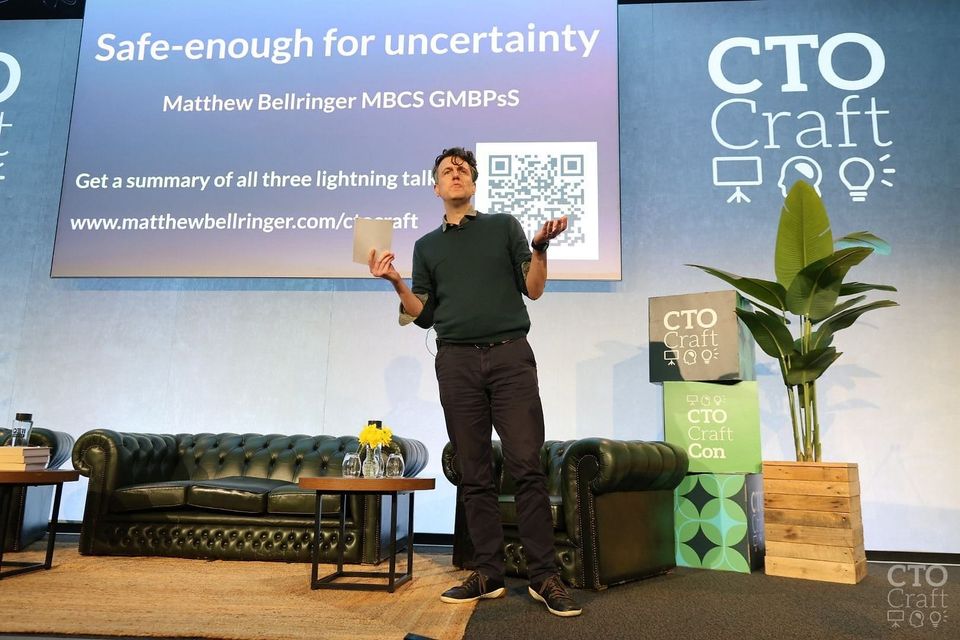
Exploring how neurodiversity can create innovation, positive change, and help us tackle the biggest challenges we face.
Bio
Full version -
"Matthew Bellringer MBCS GMBPsS is a neurodiversity and innovation specialist. They work at the intersection of neurodiversity, leadership, and complex problem-solving. Matthew provides consultancy and mentoring to neurodivergent founders, professionals, and execs, helping them connect with and use more of their innate brilliance.
Standard ways of doing things often fail unconventional thinkers, though it's easy to take those failings to heart. Matthew works with clients to help tease apart what works, what doesn't, and to start experimenting with new ways of getting their amazing ideas out into the world. It's all about connecting with what matters to clients the most, and using their greatest strengths to bring that about.
Matthew also provides consulting and facilitation to neurodivergent and purpose-led businesses. They help founding teams grow sustainably, develop new products, and avoid burnout whilst staying true to their original intent.
Alongside this work, Matthew is founder of the Applied Neurodiversity Institute. The human world needs the widest possible range of perspectives if it is to successfully navigate the next few decades. In its early stages, this organisation exists to deepen our understanding of how we can apply unconventional, particularly neurodivergent, perspectives to the interconnected crises humanity is currently facing, and to support those who are working in this area. Matthew is also chair and co-founder of NeurodiverseIT, with BCS, The Chartered Institute of IT.
Matthew has a professional background in technology, psychology, and innovation practice. They are based in Brighton, in the UK, and are a late-discovery autistic ADHDer."
Less than 100 word version -
"Matthew Bellringer is a neurodiversity and innovation specialist working at the intersection of leadership and complex problem-solving. They mentor neurodivergent founders, executives, and purpose-led teams to build sustainable ways of working, scale impactful ideas, and prevent burnout while staying true to their original vision.
Matthew is also the founder of the Applied Neurodiversity Institute, exploring how cognitive diversity can address modern interconnected crises, and chair of NeurodiverseIT with BCS, The Chartered Institute of IT. Grounded in tech, psychology, and innovation practice, Matthew is a late-discovery autistic ADHDer based in Brighton, UK."
Less than 50 word version -
"Matthew is a neurodiversity and innovation specialist. They mentor neurodivergent, purpose-led founders, professionals and executives to scale sustainably without burnout. Matthew is founder of the Applied Neurodiversity Institute, tackling complex problems through cognitive diversity, and chair of NeurodiverseIT. They are a late-discovery autistic ADHDer based in Brighton, UK."
Core discussion topics
Ditching the normal approach
The standard way of doing things get you standard results. For neurodivergent people, it often doesn't even get those. It's easy to end up internalising failure, when in reality it's a problem with methods not designed for unconventional minds.
Key takeaways - How to spot when conventional methods are getting in the way; dismantling "shoulds"; working in alignment with strengths, interests and values.
Unconventional approaches to wicked problems
We can't use the same thinking that created the problems we're facing to address them. By engaging with unconventional perspectives, we can see both opportunities and threats we would not otherwise be able to. We desperately need to make use of the widest-possible range of perspectives we can.
Key takeaways - Why neurodivergent perspectives are vital for innovation; how individual needs can drive collective problem-solving; introducing the Applied Neurodiversity Institute.
Keeping purpose-led work happening
Neurodivergent founders start their organisations with a specific outcome in mind, and often end up stuck between growth, burnout, and purpose-drift. This is even harder when convention sources of support, structures, and tools aren't compatible with the unconventional way the organisation works.
Key takeaways - Strategies for growing sustainably; alternative business structures, funding and tooling; focusing on individual and collective strengths, interests and values.
Designing for human variability
Inclusion isn't about tick-boxes, and can't be done by designing for a handful of special cases. It's about building working environments where everyone can thrive and can share their perspectives effectively with everyone else.
Key takeaways - How to benefit from diverse perspectives in an organisation for innovation and adaptability; creating safe-enough spaces for experimentation and growth; designing for neurodiversity, not just neurodivergence.
Ready-to-go questions
The Neurodivergent Leader & "The Wrong Manual"
- You often talk about neurodivergent people at work trying to follow a "manual written for someone else." What does that look like in daily life, and why is it so damaging?
- When standard business advice fails a neurodivergent person at work, why is it so easy to internalise that as personal failure?
- What is the first practical step someone can take when they realise their current way of working isn't sustainable?
Scaling Purpose-Led Businesses Without Burnout
- Why do neurodivergent, purpose-led founders run into such difficulty when they try to scale their impact and organisations?
- How can a founder grow their team and work without losing the original intent behind the organisation?
- What does "working in alignment with yourself" look like when you are leading an organisation?
The Applied Neurodiversity Institute & "Wicked Problems"
- What is the intent behind the Applied Neurodiversity Institute, and why focus on "wicked problems"?
- How does neurodiversity help us navigate complex, non-linear challenges like the everything-crisis/polycrisis/metacrisis?
- How do we shift the mainstream conversation around neurodiversity from basic accommodations to true support and the innovation which comes with it?
Background & Lived Experience
- How did your career lead you to doing work that combines so many different fields?
- How does being a late-discovery AuDHDer inform the way you work?
Media and technical
Available Formats
- Audio podcasts
- Video podcasts & livestreams (LinkedIn Live, YouTube, Twitch, etc.)
- Panel discussions, keynotes, and webinars
- Virtual workshops & Q&As
Technical Setup
- Audio: Professional microphone with acoustic treatment, IEMs.
- Video: HD/4K camera setup with soft studio lighting and a clean, professional backdrop.
- Connection: High-speed, wired fibre internet connection.
- Platforms: Experienced with Riverside.fm, StreamYard, Zencastr, Zoom, Microsoft Teams, and OBS.
Logistics & Availability
- Location & Time Zone: Brighton, UK (UK Time / London). Flexible scheduling for international hosts.
- Media Assets: High-resolution headshots and bio sheet available on request.
Some previous appearances
- Lean Agile Brighton 2025 - Safe enough spaces
- How to survive in a high-stress job when you're neurodivergent - YANAF
- A Thought I Kept podcast - How Neurodiversity Changes the Way We Experience the World
Explore more in my articles and appearances section.